 kli ARCHIVED - OCT 2026
kli is archived .
kli was the CLI over the ksctl engine: one command, any cloud, carbon-aware region selection. It shipped 27 releases across AWS, Azure, Civo, and self-managed clusters. It is no longer maintained.
Why
Three reasons, in order of how much they mattered.
Kubmin took the question further.
kli could pick an efficient region at create time. It could not tell you what your workloads actually cost or emitted afterwards, per release, per image tag. That turned out to be the part people needed.
Provisioning whole clusters is a full-time commitment.
New cloud APIs, new Kubernetes versions, new provider quirks. I cannot honestly give it that alongside everything else I build.
Stopping is part of engineering.
A tool that says it is unmaintained is more useful than one that quietly rots. Nobody should be shipping production on top of kli in 2026.
What I build now
The same questions, taken further. These are maintained.
Kubmin
Per-workload cost, efficiency and SCI/SEI tracking, including release-over-release diffs per image tag.
Exploreinfai
One profile shape for llama.cpp and vLLM, live tokens/sec plus CPU, RAM and VRAM telemetry.
Exploreinfaiw
A daemon-based harness where sidecar loops must pass an acceptance check and every event lands on a durable timeline.
ExploreStill using kli?
- Source, documentation and release binaries stay available as they are.
- No support, no security updates, no new provider or Kubernetes version support.
- Bugs will not be fixed. If a cloud API changes and kli breaks, it stays broken.
- If you are migrating off: kubectl, kubeadm or K3s, and Terraform cover what kli was wrapping underneath anyway.
Want to take over?
If you still depend on kli and want to become its maintainer, say so. The code is Apache-2.0 and the surface area is small enough for one person.
What kli did
Everything below is kept as a record of what was built: multi-cloud provisioning, carbon-aware region selection, sustainability metrics, and the release notes. Read it as history, not as a feature list.
Smart Kubernetes Management
What kli could do: one-command clusters across providers, with sustainability and cost built into the decision rather than bolted on afterwards.
Simplified Cluster Setup
Create fully functional clusters with one command. Supports all major cloud providers and self-managed Kubernetes solutions.
kli cluster create Developer
Velocity
Spin up clusters in minutes for faster workflows.
Intuitive CLI reduces the learning curve for development teams from learning terraform and juggling multiple tools to near zero configuration.
Dynamic Region Switching
Intelligently switches regions to optimize costs and reduce carbon footprint while maintaining your workload specifications.
Eco-friendly Infrastructure
Prioritize eco-friendly infrastructure with data-driven metrics on carbon intensity and renewable energy usage.
Simple Commands,
Powerful Results
The CLI was built for simplicity without sacrificing power: one binary, one command, no Terraform or Ansible to wire up first.
How kli Worked
From installation to production-ready Kubernetes clusters in minutes, not hours
1. Install kli
Installed with a single command on Linux, macOS and Windows via WSL. Prebuilt binaries still exist on GitHub Releases; the install script is no longer maintained.
2. Define Your Cluster
Specify your requirements with simple CLI flags or a configuration file. Let kli handle the complexity.
3. Create Your Cluster
Single command deployment with smart defaults. kli handles all the infrastructure provisioning.
4. Get Cluster Insights
Use the powerful Cluster Summary feature to get a comprehensive view of your cluster's health, performance, and potential issues.
Built Around Green Energy
kli selected regions and instances based on carbon intensity and renewable mix, so sustainability was a property of the cluster rather than a report you ran later.
Intelligent Region Selection
Automatically selects regions with higher renewable energy mix based on real-time data.
Energy-Efficient Resources
Optimizes infrastructure for power usage without compromising on performance.
Cost-Carbon Balance
Finds the perfect balance between reduced carbon emissions and operational costs.
Clusters Created in Minutes
Production-ready Kubernetes from a single command, with no Terraform or Ansible to wire up first
One Command Setup
Create a fully functional production-ready Kubernetes cluster with a single command, no complex configurations needed.
kli cluster create Ready in 5-10 Minutes
Your Kubernetes environment is up and running in just 5-10 minutes, complete with all essential components.
Multi-Cloud Support
Deploy across AWS, Azure, GCP and other providers with consistent experience and unified management.
How kli Compared, Then
Measured against the Kubernetes tooling of 2024. This is a record, not a recommendation.
| Features | kli Recommended | Other Tools |
|---|---|---|
| Setup Time | 5-10 minutes | 30-60+ minutes |
| Commands Required | Single Command | Multiple Complex Commands |
| Required Knowledge | Minimal | Extensive |
| Cloud Provider Support | Multiple with Unified API | Limited or Provider-Specific |
| Carbon Aware Deployments | Built-in | Not Available |
Highlights from kli
The sustainability and cost features shipped across the project's lifetime
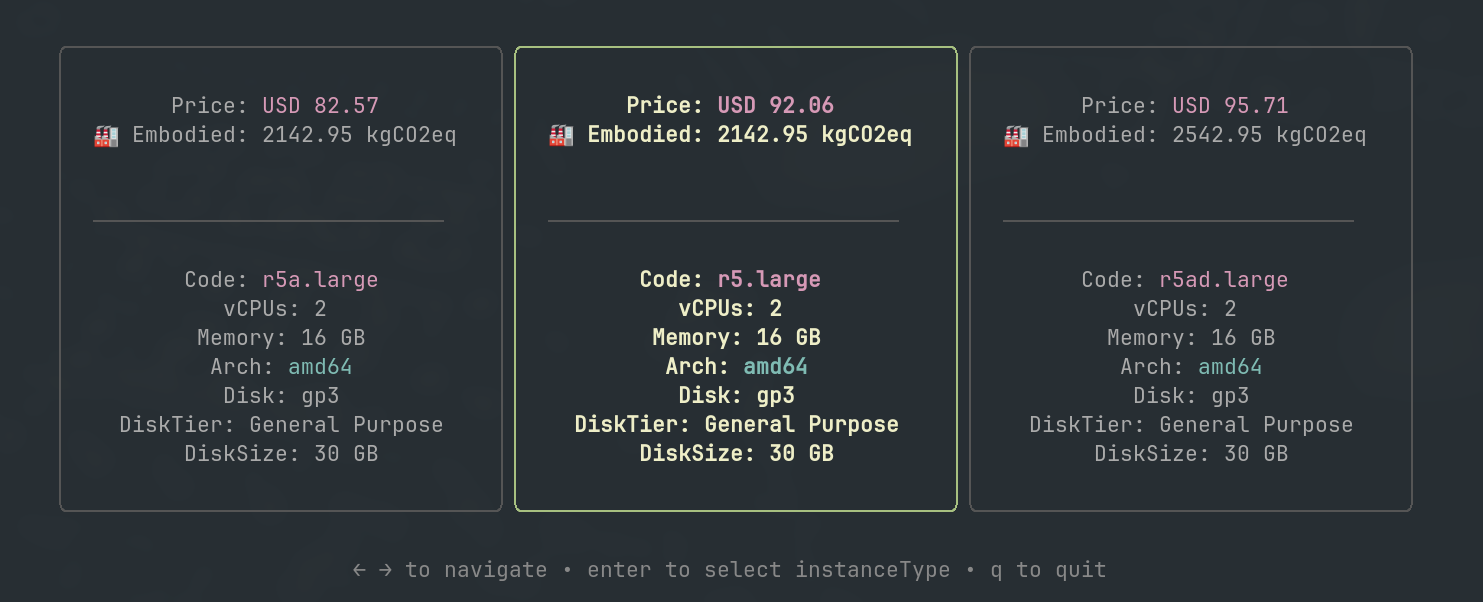
Smart Region and Instance Selection
This intelligent feature guides you in selecting the optimal region and instance type for your clusters by analyzing both emissions data and cost efficiency. It automatically ranks potential choices based on carbon intensity, renewable power percentage, and overall cost.
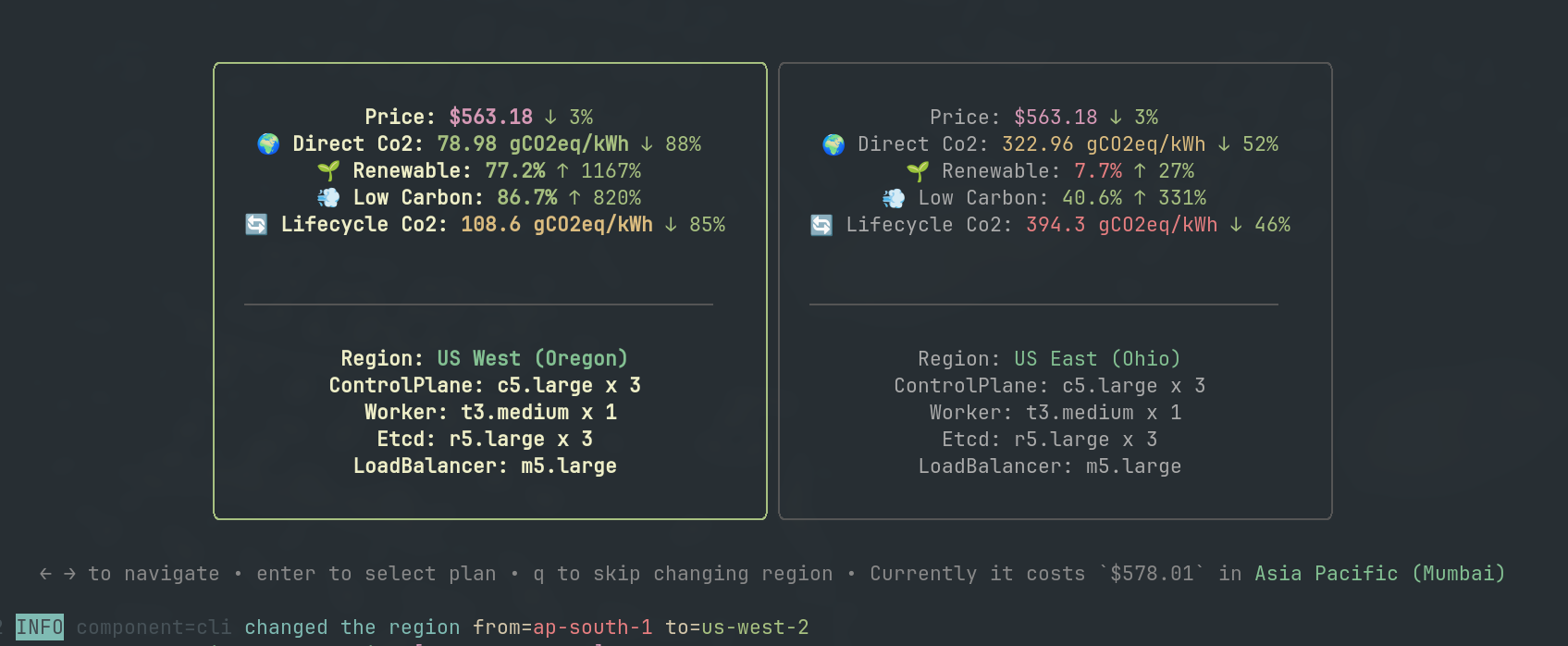
Dynamic Region Switching
Dynamic Region Switching intelligently selects the most sustainable and cost-effective region for your Kubernetes clusters, minimizing expenses and emissions while maintaining the same instance type and performance characteristics.
Frequently Asked Questions
What happens to kli now that it is archived
Still have questions? We're here to help!